Smart Renda Free wall check
Homeowner guide · North London

Rendering period homes in North London

Older houses do not behave like modern ones, and the render system that suits a 1990s build can cause real problems on a Victorian solid wall. This page explains what to ask before you commit.

The one thing that makes old walls different

A modern house keeps water out. An older solid-wall house manages water instead. Built with soft bricks and lime mortar, and with no cavity, these walls take in a certain amount of moisture during wet weather and let it evaporate back out again when conditions allow. The wall works as a system, and that system depends on being able to breathe.

Wrap that wall in something dense and sealed and you interrupt the drying half of the cycle. Moisture still gets in, through a crack, a defect, or simply from inside the house, and now it has nowhere to go. It moves to wherever it can escape, which is usually the internal face. That is the mechanism behind a lot of damp that appears in the year or two after an older house is rendered or coated.

None of this means an old house cannot be rendered. It means the whole build-up has to be chosen for the wall it goes onto, and that decision needs to be made by someone who has looked at the wall.

What we check on an older property

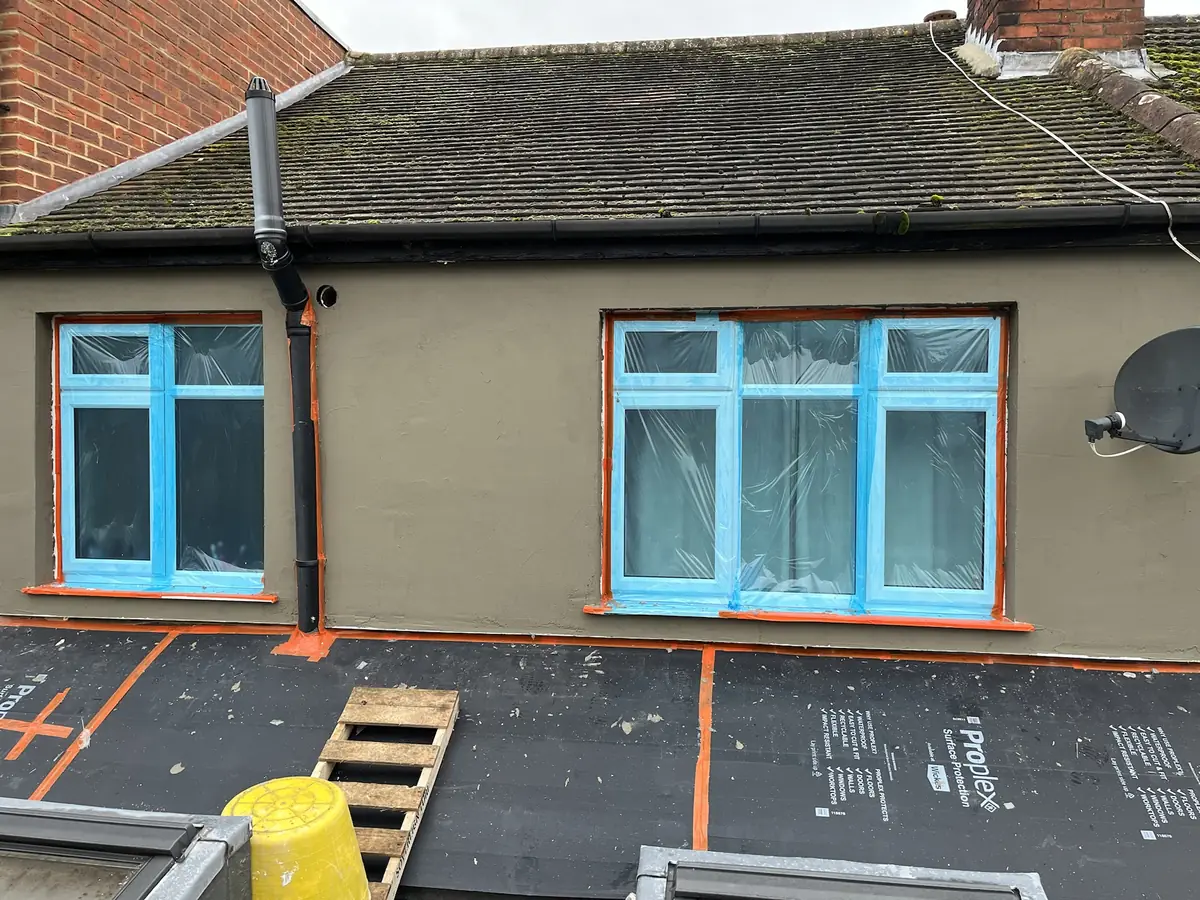
Base coat render and bead detailing being formed around windows on an older London property with surfaces masked and protected
Detailing around openings on an older property. The reveals, sills and stop beads are where most long-term problems begin or are prevented.

Choosing a system for an old wall

Lime-based renders

The traditional answer, and still the right one for genuinely old, soft-brick or historic walls. Lime is vapour permeable and flexible enough to accommodate small movements without cracking. It is slower to apply and needs the right conditions to cure, which is reflected in the cost.

Vapour permeable thin-coat systems

Some modern silicone thin-coat systems are permeable enough to work on a range of older walls, provided the whole build-up is compatible and the preparation is right. This is often the practical middle ground on interwar and later-Victorian housing.

Dense cement-based renders

Hard, relatively impermeable and prone to cracking as the wall behind moves. On a modern substrate that can be fine. On a soft old wall it is the combination most likely to cause the trapped-moisture problem described above, and it is also the hardest to remove later without damaging the brick.

An honest limit on what we do. We are a render and external wall insulation contractor, not a conservation architect or a damp surveyor. Where a property is listed, historically significant, or showing damp we cannot confidently attribute to an obvious cause, the right answer is a specialist assessment before anyone renders anything. We will tell you when we think you are at that point.
24+Years in the trade
400+Homes completed
15-yearManufacturer-backed warranty
FreeNo-pressure survey

When not to render

It is worth saying plainly, because most contractors will not. There are situations where rendering an older North London home is the wrong move.

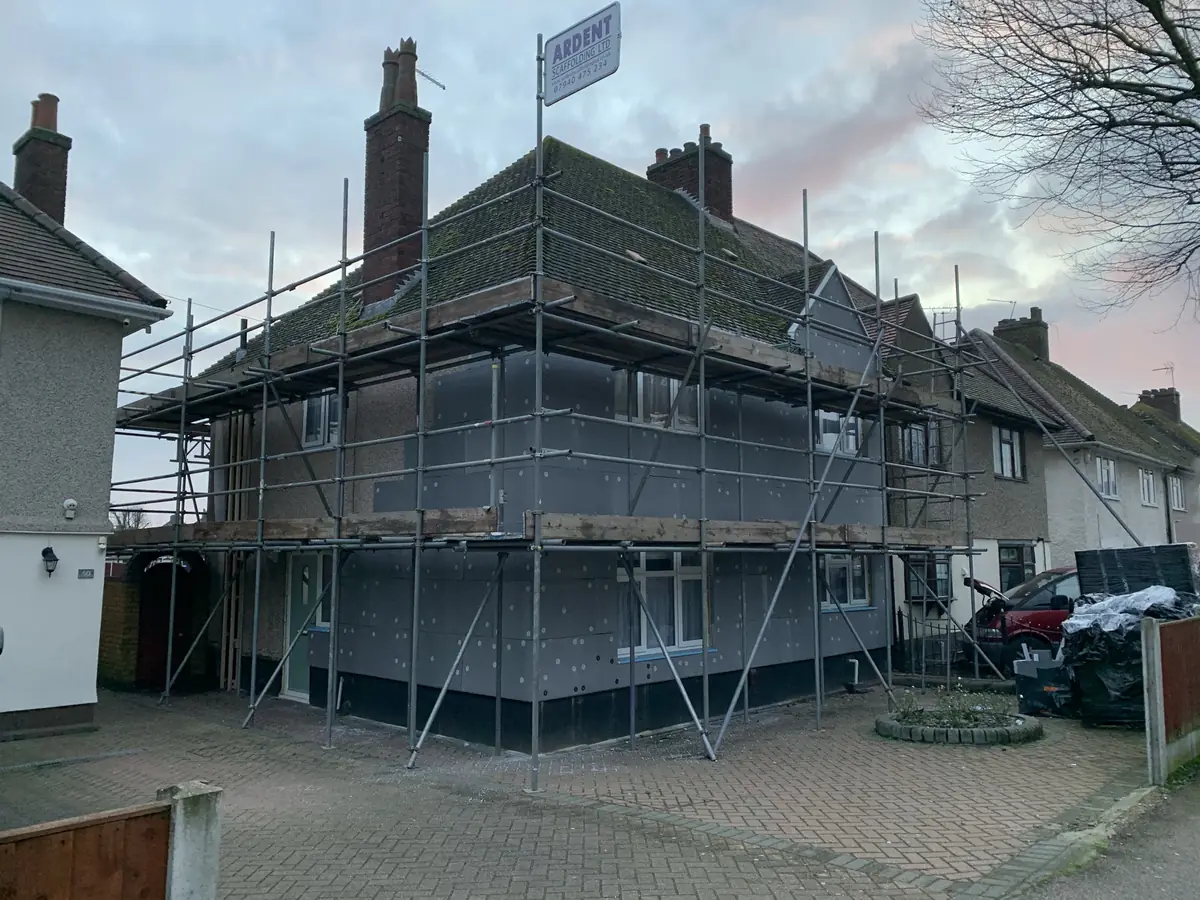
Insulation boards being fitted to a period semi-detached London home with scaffolding in place
Where a solid-wall property is a good candidate, insulation and render go on together while the scaffolding is already up.

Period property questions

Can you render a Victorian house?

Often yes, but the system has to suit the wall. Many Victorian and Edwardian homes are solid-wall and built with lime mortar, and they manage moisture by letting it move through the structure and evaporate. A dense, sealed modern render can interrupt that and push moisture problems inside. The build-up matters more on an old house than on a modern one.

What is a breathable render?

It is a finish that allows water vapour to pass through it rather than trapping it in the wall. Lime-based renders are the traditional example. Some modern silicone thin-coat systems are also vapour permeable. The important thing is that the whole build-up is compatible, not just the top coat.

Should I render over original brickwork?

It is a permanent change and worth thinking about carefully. If the brickwork is sound and attractive, rendering it is usually a decision about appearance and thermal comfort rather than a repair. If the brick is spalled, previously painted or already rendered, the calculation is different. We would rather have that conversation honestly than assume the answer is yes.

Do I need permission for a listed building or conservation area?

Listed buildings need listed building consent for changes of this kind, and conservation areas and article 4 directions restrict what is permitted on ordinary houses too. Always confirm the position with your local authority before agreeing any work. We raise it at survey but we are not a substitute for the council.

Which areas do you cover for period properties?

Across North and North West London, including Barnet, Finchley, Mill Hill, Islington, Hackney, Haringey, Harrow, Edgware and the surrounding areas.

Areas we cover

We specialise in solid-wall and period homes across London and surrounding areas, including:

Get an opinion before you commit

Send a few photos and your postcode. If we think your property needs a specialist rather than a renderer, we will tell you that instead of quoting.

Request a free wall check