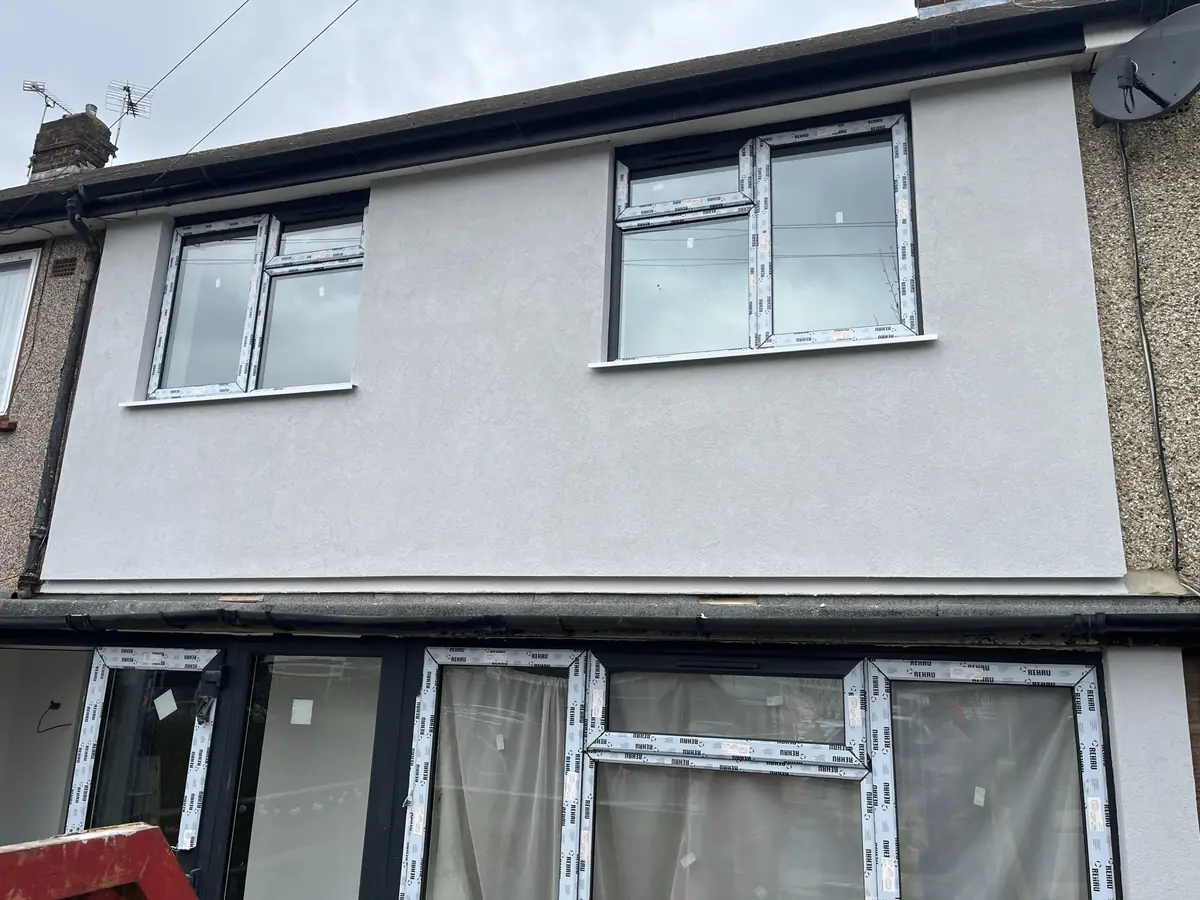
Cracked render does not automatically mean the whole house needs redoing. It also does not always mean a quick patch will hold. This guide explains how to tell the difference before you spend anything.
Render cracks in recognisable patterns, and the pattern is the most useful free information you have. Before anyone quotes you for anything, it is worth standing back from your own house and looking at what kind of cracking you actually have.
A network of hairline cracks spread fairly evenly over an elevation is usually the finish ageing. It is common on older cement-based renders and pebbledash and, on its own, it is rarely urgent. It matters more when it starts letting water in, which shows up as darker patches after rain that take a long time to dry.
The corners of openings are where stress concentrates. Short diagonal cracks there can be thermal movement. Longer ones, especially if they are wider at one end or continue into the brickwork below, are worth having assessed properly rather than covered over.
Cracking that runs along a consistent horizontal or vertical line often follows something behind the render: a joint, a lintel, a change of material, or the edge of an earlier repair. That tells you the render is reacting to what it was applied over.
Green algae, black staining or moss around a crack means water is sitting there regularly. The crack may be the symptom of a drainage problem rather than the cause of one.
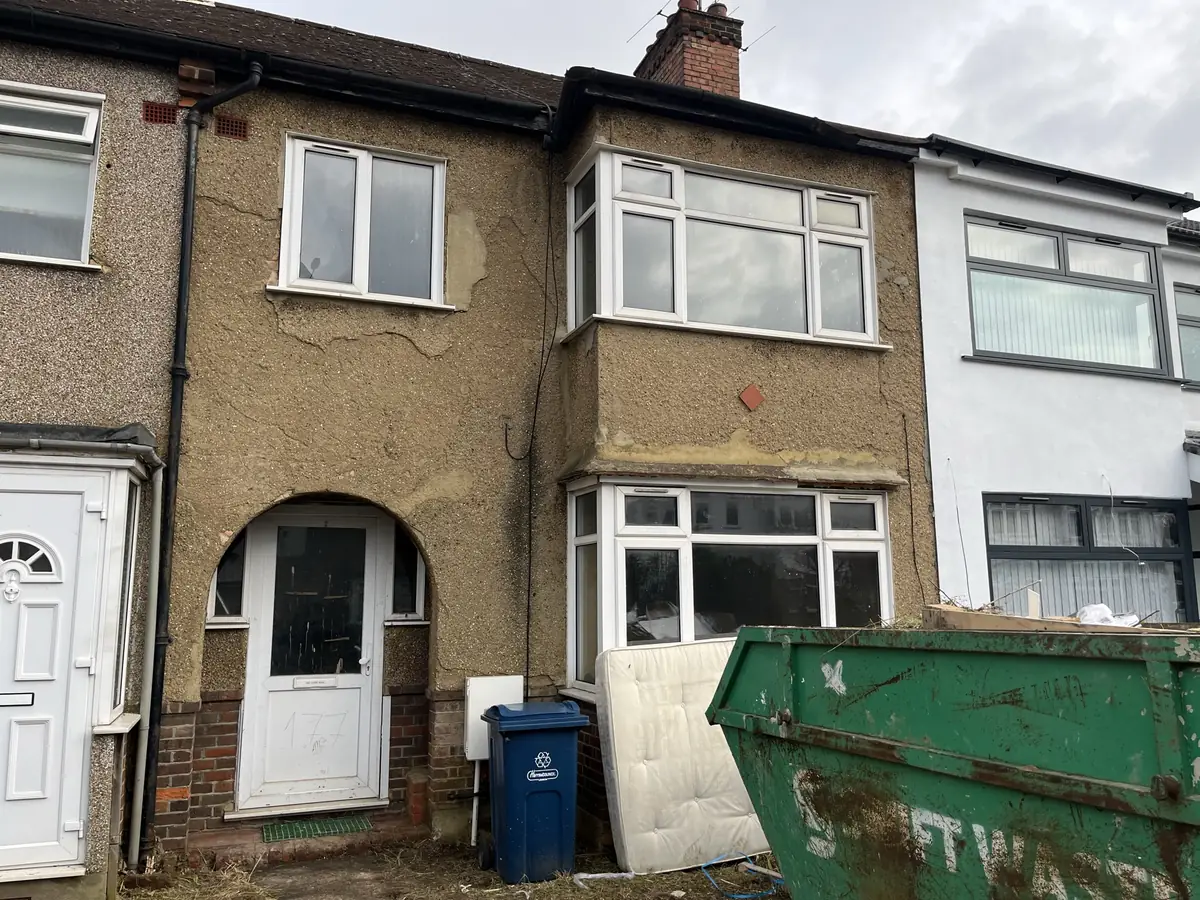
This is the single most useful check a homeowner can do, and it costs nothing. Tap the render gently with your knuckles or the handle of a screwdriver, working across the wall as high as you can safely reach from the ground.
Blown render will eventually come off, cracked or not. This is why a wall can look acceptable from the street and still need substantial work, and equally why a wall with visible cracks can sometimes be sound underneath.
Safety note: do this from ground level only. Nothing on an upper elevation is worth a ladder accident, and any competent surveyor will check it from scaffolding or a tower as part of a free survey.
Patching makes sense when the damage is genuinely contained, the surrounding render is well bonded, and whatever caused the failure can be fixed at the same time. A blown patch under a leaking sill, repaired properly once the sill is sorted, will hold.
The realistic downside is appearance. Matching an aged pebbledash, roughcast or textured finish is very difficult, because the original aggregate and decades of weathering cannot be reproduced. A structurally sound repair can still be an obvious one. Anyone who promises an invisible patch on a ninety-year-old finish is overselling.
Once you are dealing with multiple failed areas, cracking across a whole elevation, or a wall that has already been patched more than once, the arithmetic usually changes. Scaffolding is a fixed cost whether you repair one square metre or forty, and repeat visits mean repeat scaffolding.
There is a second consideration specific to older London homes. A great many pre-1930s properties are solid-wall, with no cavity. If the render is coming off anyway and the scaffolding is going up anyway, that is the natural moment to ask whether an insulated render system is worth considering instead of a like-for-like replacement. It is not automatically the right answer, but it is the right question, and it is much more expensive to ask it two years later.
When a repair does not last, it is nearly always one of four things, and none of them are exotic.
This is why an inspection matters more than a quote. A price given over the phone for cracked render, without anyone looking at the wall, is a guess about work nobody has diagnosed.
Fine crazing spread evenly across a surface is usually the finish itself ageing and is often not urgent. Isolated cracks that are wider at one end, run diagonally from the corners of windows or doors, or continue through a bead or a joint deserve a closer look, because those patterns can indicate movement rather than surface wear.
Tap the wall gently with your knuckles or the handle of a screwdriver. Sound render gives a solid, dull note. Render that has lost its bond sounds hollow. Map out the hollow areas and you have a rough idea of the scale of the problem.
Masonry paint can hide fine crazing for a while, but it does not restore a bond or stop water getting in through a live crack. Painting over blown or actively cracking render usually delays the repair rather than replacing it.
No, and most cracking is not subsidence. Age, thermal movement and water ingress account for the majority of failures we see. But diagonal cracking from the corners of openings, cracks that are noticeably wider at one end, or cracking that has visibly changed over months should be assessed properly before any cosmetic repair.
Yes. Any surveyor confident in their diagnosis will expect you to. Be wary of anyone who will not put the reasoning in writing alongside the price.
We specialise in solid-wall and period homes across London and surrounding areas, including:
Send three photos and your postcode. We will tell you what we think it is before anyone talks about price.