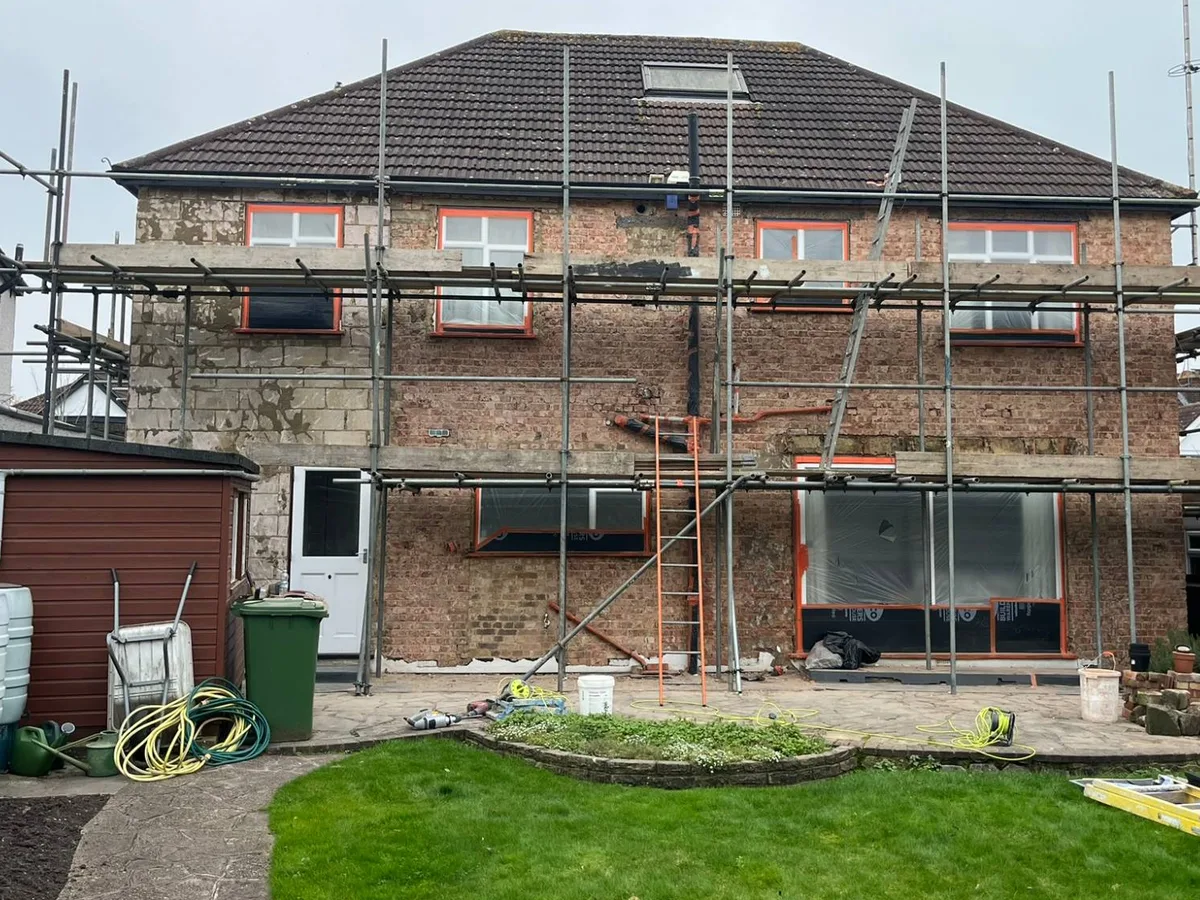
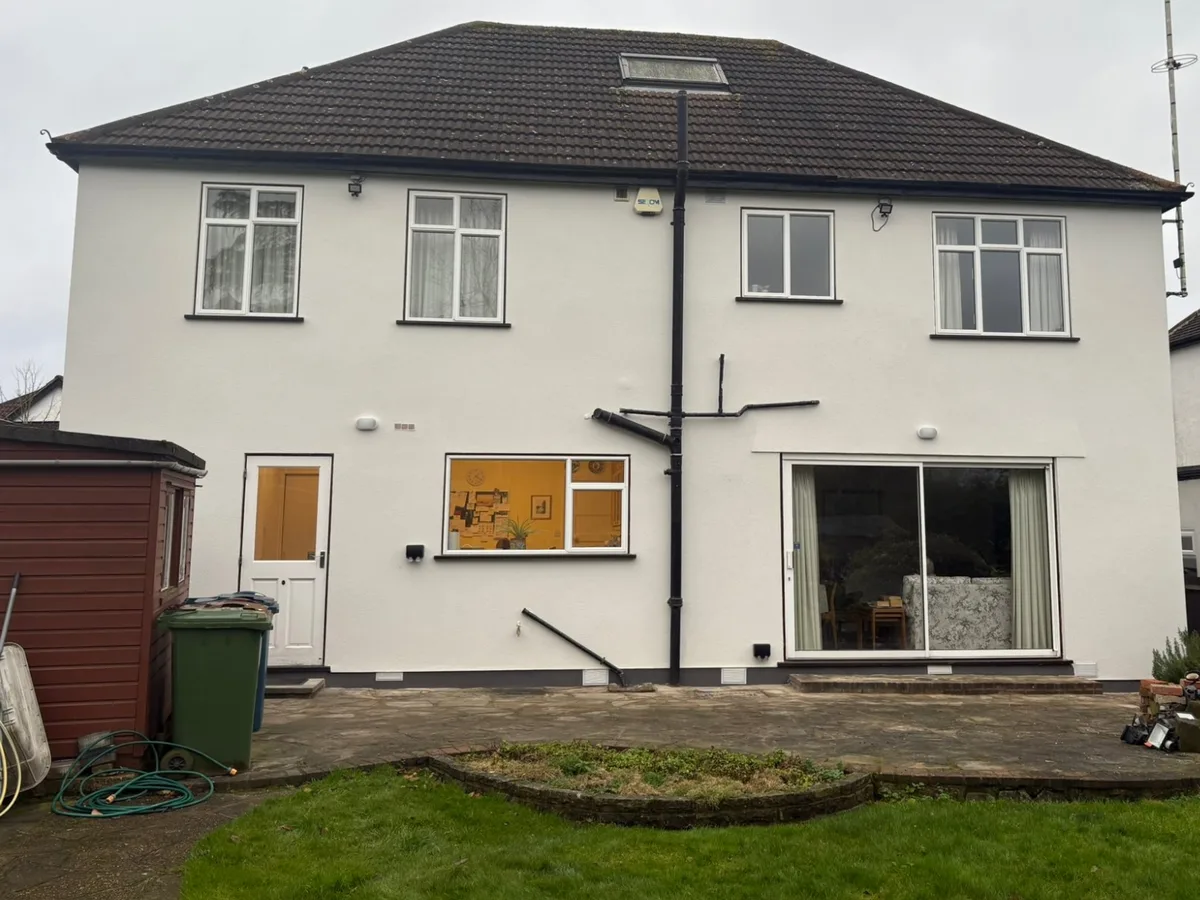
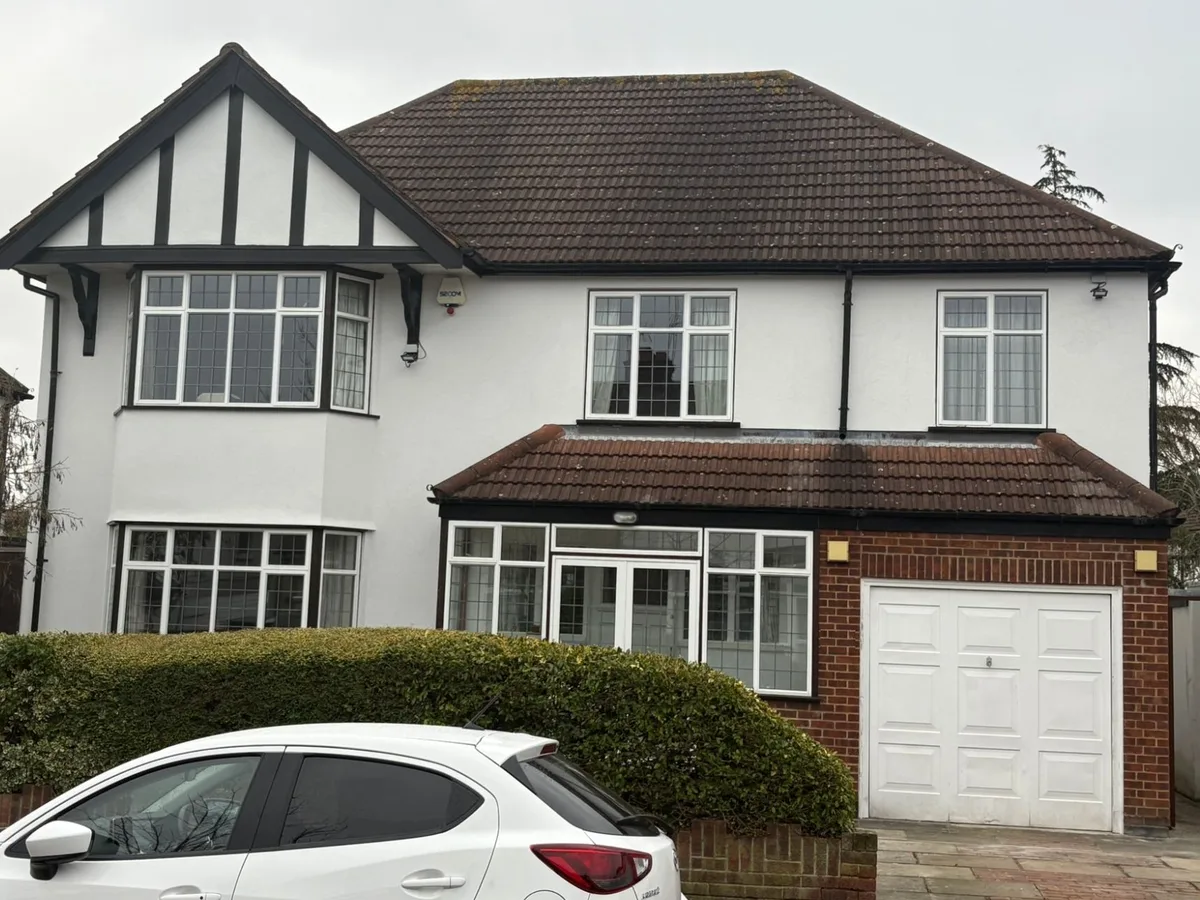
Yes. When old render has cracked, blown or been patched one time too many, the lasting fix is often to take it off back to the brick and start again. This guide explains what render removal involves, what we usually find underneath, and why we re-render afterwards.
Not every tired render needs removing. If it is still well bonded to the wall, it can sometimes be repaired or rendered over. Removal is the right answer when the old render can no longer be trusted as a base.
We tap-test the whole wall at survey to find the hollow areas, so you know how much of the render has actually failed before anyone talks about removal. For help reading the cracks on your own wall, see our guide to cracked render: when to patch, when to re-render.
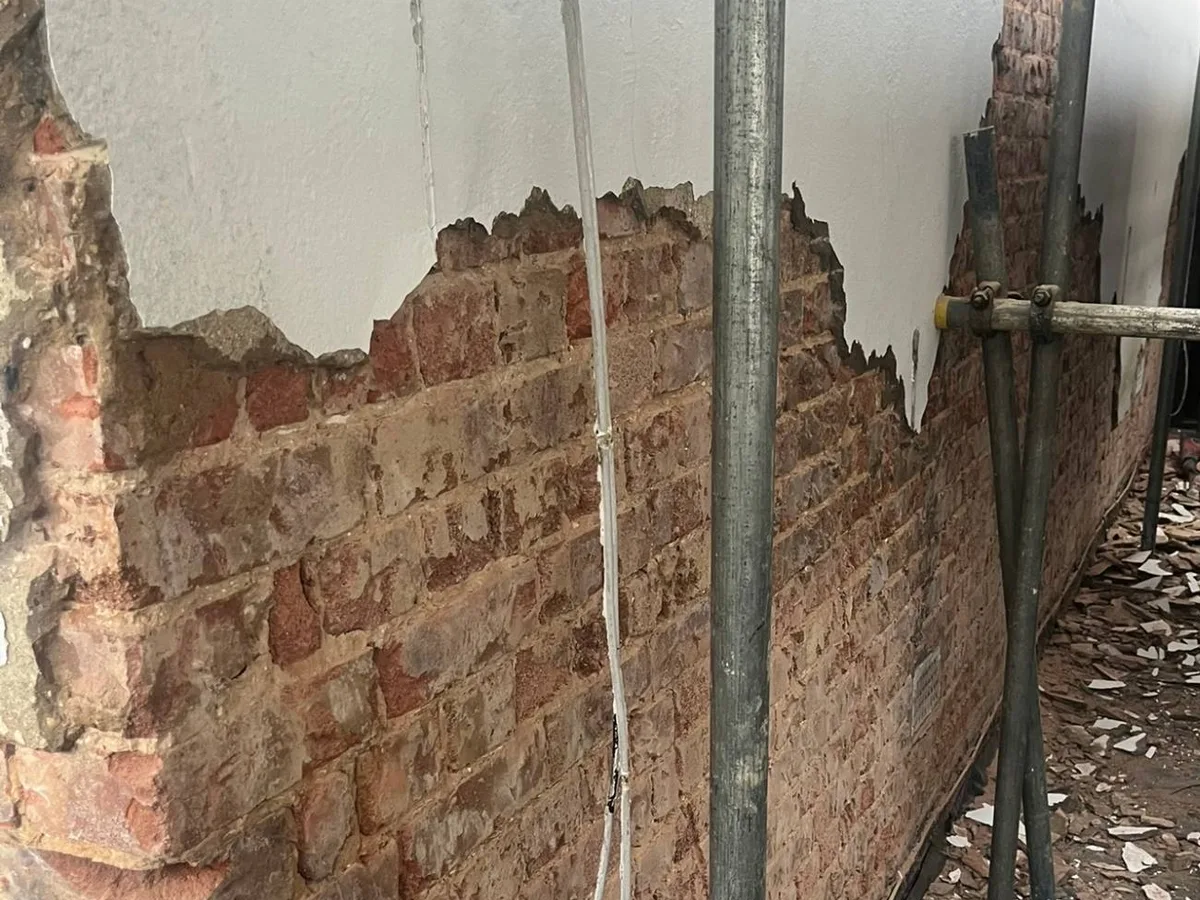
Houses are often rendered for a reason. Once the old render is off, you see the wall as it really is.
None of this matters once the wall is re-rendered, as long as the base is sound. It is also why we do not offer removal to leave the brick on show: that is specialist brick restoration, and the brick under old render is rarely in a state to be seen.
With the old render off and the wall made good, you choose the new finish. We use through-coloured silicone render, K Rend and monocouche systems, smooth or lightly textured, in colours that do not need painting. On a solid-wall house, it is also the most sensible moment to consider insulation behind the new render, because the scaffolding and preparation are already in place. We explain both options at survey, and you decide.
Replacing render like for like is not usually a problem, but changing the finish or colour can need permission in conservation areas, on listed buildings and on streets with extra controls. We check the position for your address at survey.
Yes. Failed, cracked or hollow render can be taken off back to the brick or block, the wall made good, and a new render system applied. We do this regularly on London homes, and it is often the only way to get a lasting finish when the old render has let go.
If the old render is sound and well bonded, rendering over it can work. If it sounds hollow, is cracked across the elevation or has been patched more than once, new render applied over it is only as good as the failing layer underneath. In that case we take it off.
Some damage to the brick face is normal when hard cement render comes off, which is why we only recommend removal where the wall is going to be re-rendered. The new render covers the brick, so a scarred face is not a problem, but loose or broken bricks are repaired first.
That is specialist brick restoration and repointing, which we do not offer. The brick under old render is often patched, mismatched or damaged by the removal itself. At survey we can tell you what we see, but our work is removing render to re-render.
We rake out and fill open or loose joints as part of preparing the wall for the new render. That repointing is covered by the render. We do not do repointing for brickwork that will be left exposed to the weather.
It depends on the size of the house and how firmly the old render is stuck. Removal and making good are usually a few days of a re-rendering job. We give a timescale with the quote after the survey.
We remove and replace render on homes across London and surrounding areas, including:
Send three photos and your postcode. We will tell you what we think before anyone talks about price.