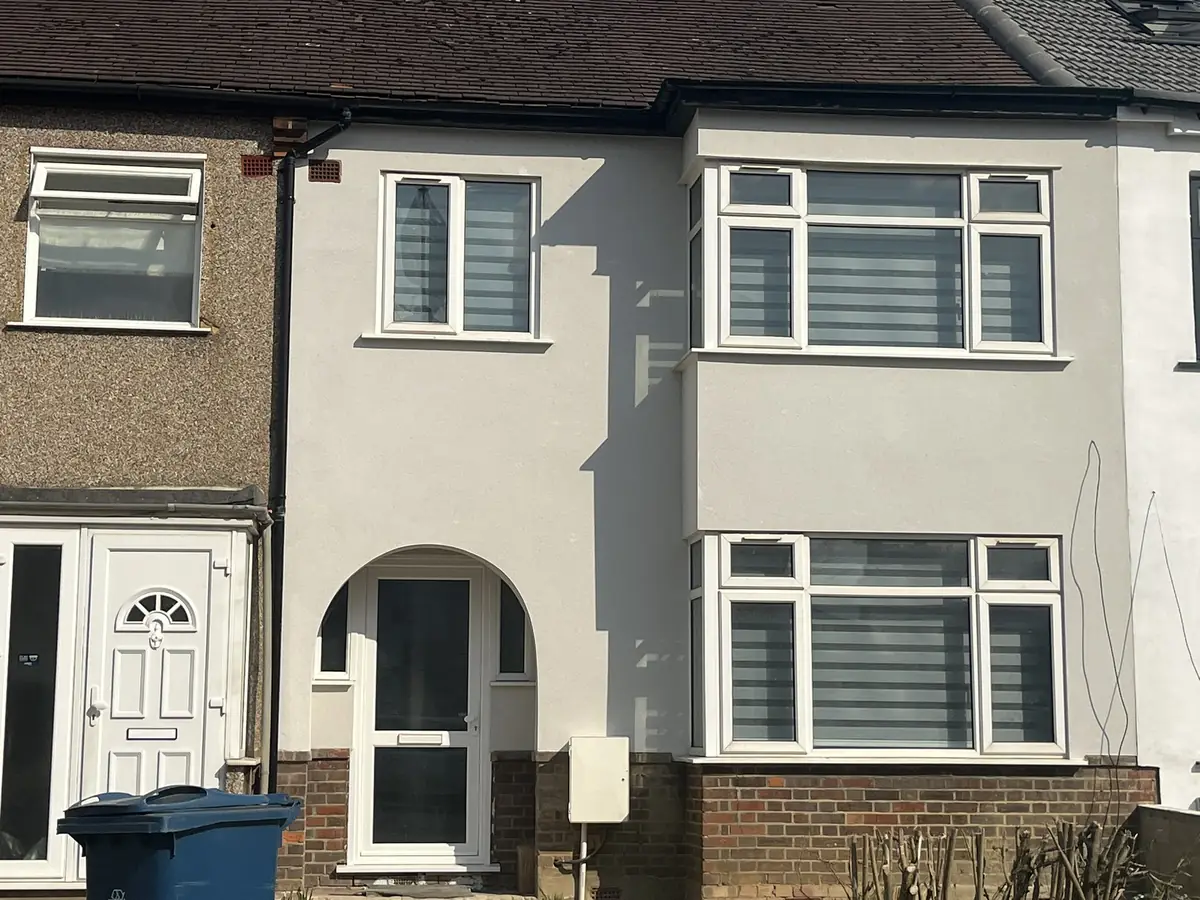
Much of Harrow was built between the wars, and a large share of those semis and terraces still wear their original pebbledash or roughcast. After eighty or ninety years of London weather, that finish starts to crack, hollow and stain.
A crack in a render finish can mean very little or quite a lot. It might be the render itself giving up after decades of frost and heat. It might be water tracking in behind the finish from a failed sill, a blocked gutter or a leaking downpipe. Occasionally it points to movement in the structure underneath, and no amount of surface repair will hold if that is the case. The only way to tell the difference is to look properly, which is where we start.
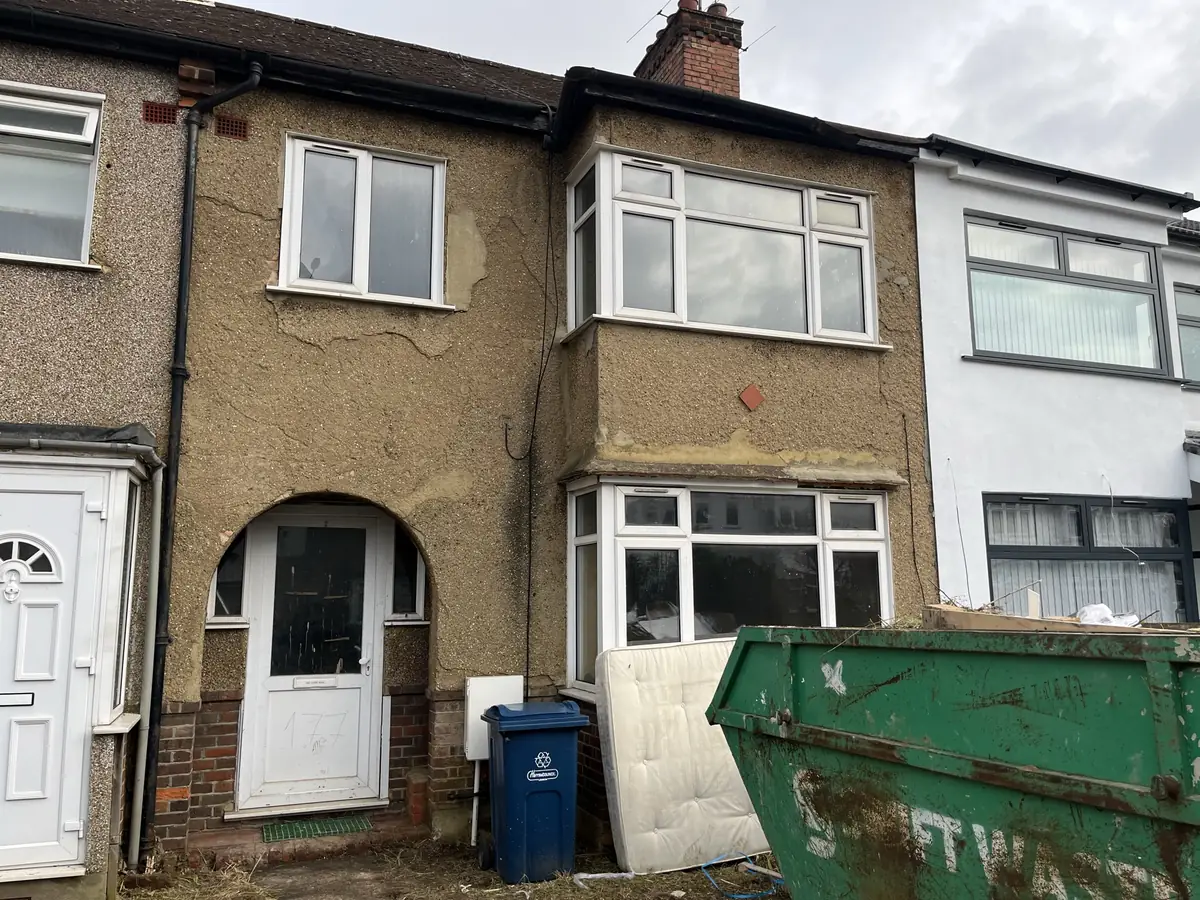
An inspection takes in the whole elevation, not just the crack you can see from the pavement. We tap the render to find hollow areas, check where water is getting in and look at how previous repairs have behaved.
We inspect before we quote. If the cause is a leaking gutter rather than the render, we will tell you that.
This is the question most Harrow homeowners actually want answered, and it is worth being straight about it.
A repair usually makes sense when the damage is contained, the rest of the wall sounds solid, and the cause is something that can be fixed at the same time. Localised patching is cheaper, quicker and needs less scaffolding.
A fuller approach usually makes sense when cracking runs across the whole elevation, when large areas sound hollow, when the render has already been patched more than once, or when the wall behind is a solid brick wall that would benefit from being insulated at the same time as it is refinished. On a solid-wall home, re-rendering is often the moment to consider external wall insulation, because the scaffolding and preparation are already paid for.
A surveyor visits, inspects the elevations and talks through what they have found. You get an itemised written quote covering preparation, the repair or system proposed, detailing around windows and sills, and scaffolding where it is needed. On site we cut out failed material back to a sound edge, deal with whatever was letting water in, and rebuild the finish. There is a clean-down at the end of each day, and sign-off with warranty paperwork at the end of the job.
It depends on how much of the wall has failed and why. Isolated damage on otherwise sound render can often be repaired. Widespread cracking, large hollow areas or render that has failed more than once usually points to a fuller approach. We inspect before advising.
We cover Harrow town centre, Wealdstone, North Harrow, South Harrow, West Harrow, Rayners Lane, Harrow on the Hill and the surrounding HA postcodes.
Patch repairs on older pebbledash and roughcast rarely match perfectly, because the original materials and decades of weathering cannot be reproduced exactly. We tell you honestly at survey whether a repair will be visible, so you can decide whether that matters to you.
Sometimes, yes. But if the wall is coming back to bare masonry anyway and the scaffolding is up, it is worth at least asking what an insulated system would involve before you commit to a like-for-like finish.
We work on solid-wall and period homes across North and North West London, including:
One short form, or a WhatsApp message with a few photos and your postcode. A real surveyor takes it from there.